Jeffrey Research GroupUNIVERSITY OF NEVADA, RENO
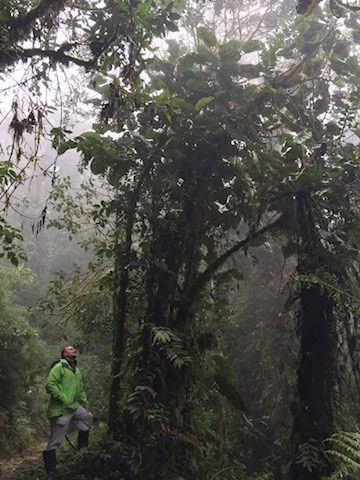
Cloud forest canopy in Ecuador
What we study

Research

From tropical forests to the bench: how we find, identify and build the molecules organisms use to survive.

Research

Synthesis and discovery

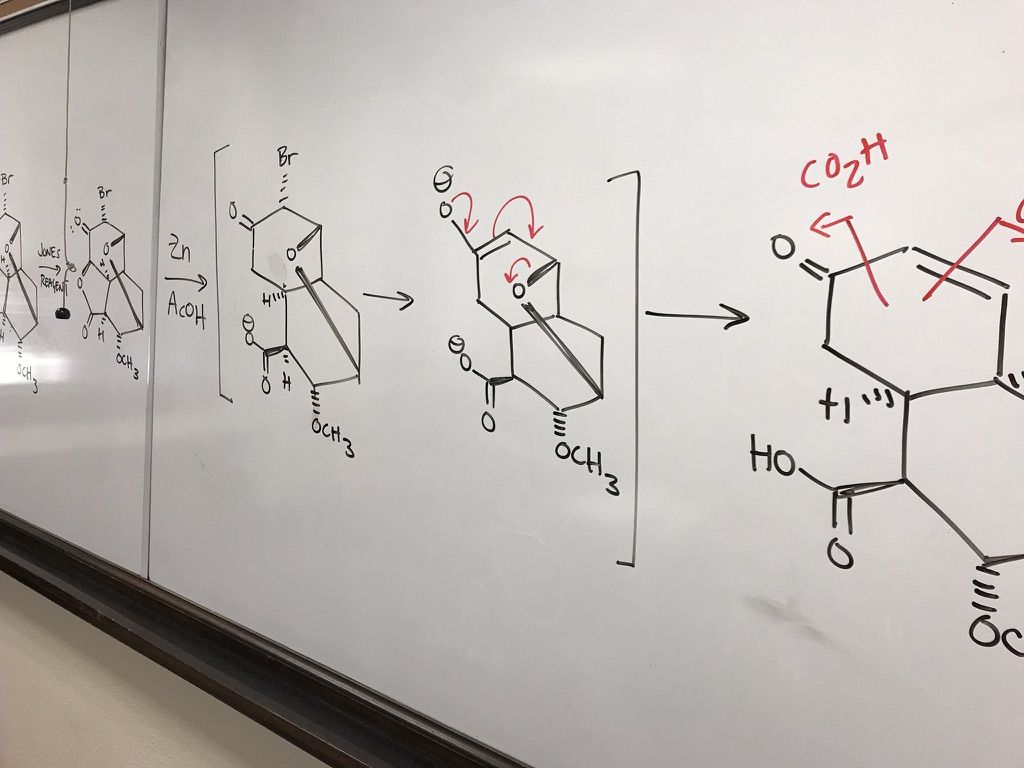
Synthesis runs through everything we do. Field collections and ecological experiments point us to compounds that matter; isolation and spectroscopy tell us what they are; synthesis confirms their structures, supplies enough material for biology, and lets us tune what they do.

Whiteboard reaction mechanism with curved arrows
Organic synthesis · the core of the group

Total synthesis and new reactions

We develop new reactions and use them to make complex molecules. Our program introduced aza-oxyallyl cations as reactive intermediates for heterocycle synthesis, enabling (4+3) and (3+2) cycloadditions, 1,4-diamination of dienes and dearomative indole chemistry. We apply these and biomimetic strategies to the total synthesis of Piper natural products, to scytonemin and its analogs, and to synthetic analogs of antifungal leads active against Candida auris.

J. Am. Chem. Soc. 2011, 2015 · Org. Lett. 2012–2016 · Scytonemin synthesis, US 2026/0042736 A1
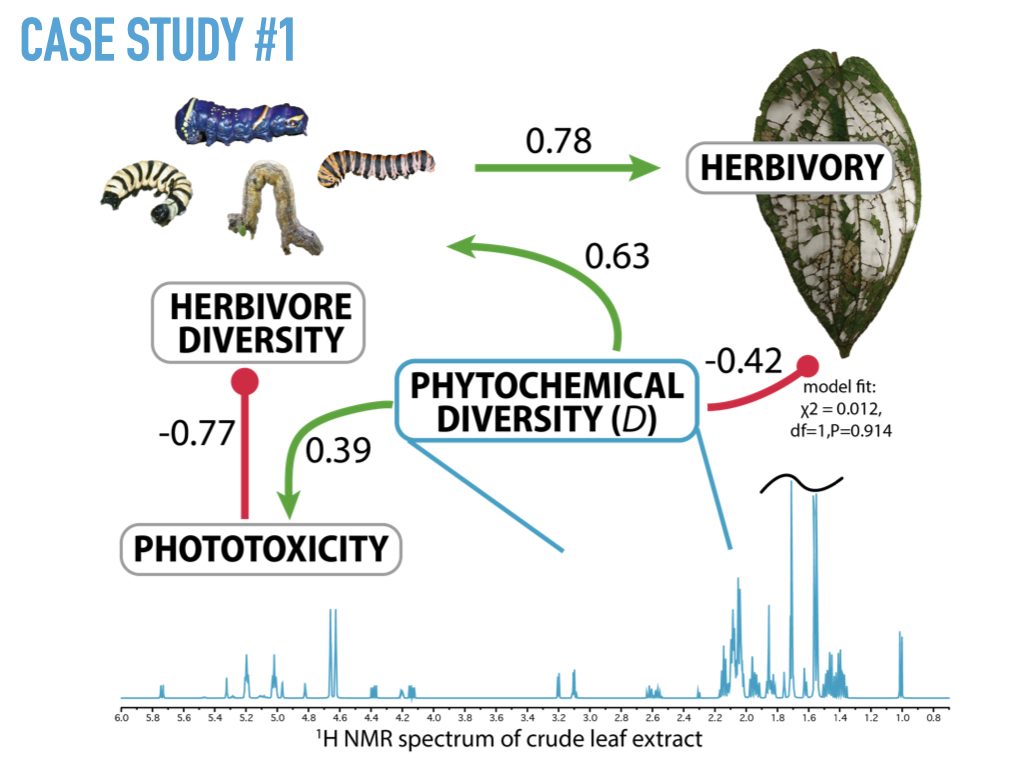
Path diagram linking phytochemical diversity measured by 1H NMR to herbivory, herbivore diversity and phototoxicity

Phytochemically diverse plants host a broader herbivore diversity and reduce herbivory.

Chemical ecology

Phytochemical diversity in Piper

The pepper genus Piper is our model for asking how chemical diversity in plants shapes the insect communities that feed on them. With the Dyer, Richards and Parchman groups we link intraspecific chemical variation to herbivory, caterpillar specialization and tropical forest diversity.

PNAS 2015 · New Phytologist 2016 · Journal of Ecology 2022

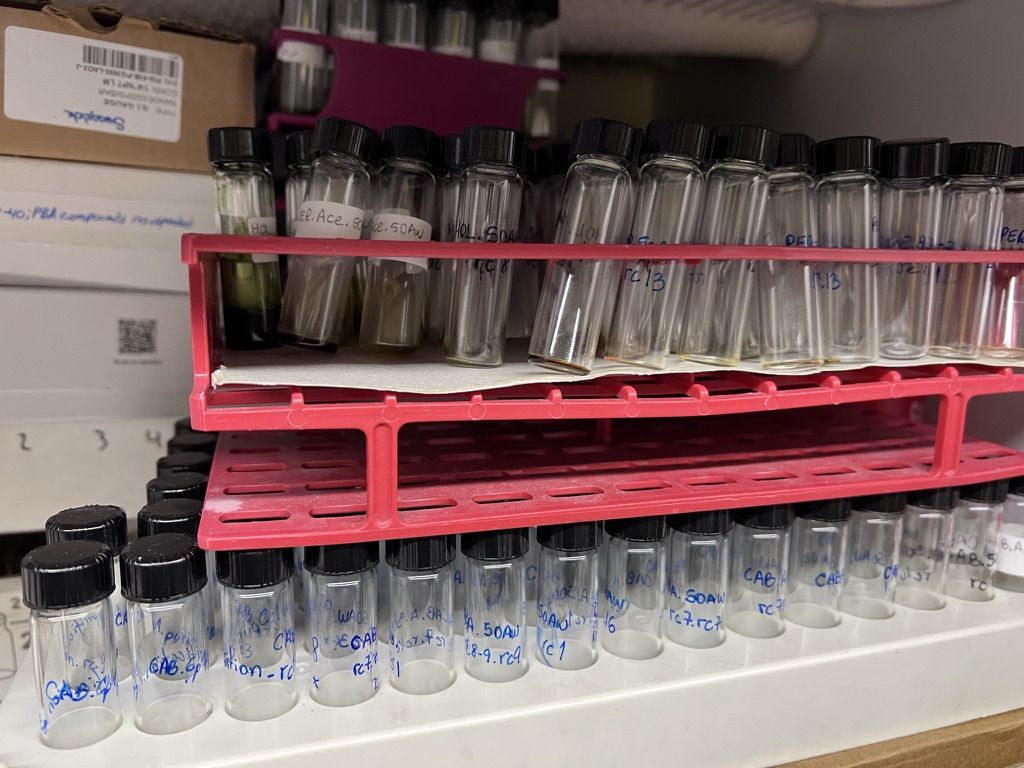
Rows of labeled extract and fraction vials
Natural products discovery

New molecule discovery

We use ¹H-NMR networks and non-target metabolomics to connect structural features in crude extracts to biological activity, then isolate the compounds responsible. Recent work has uncovered new neolignans, flavanone meroterpenes, octopamine and tyramine in floral nectar, and antifungal leads against Candida auris.

Front. Plant Sci. 2018 · iScience 2022 · Molecules 2025

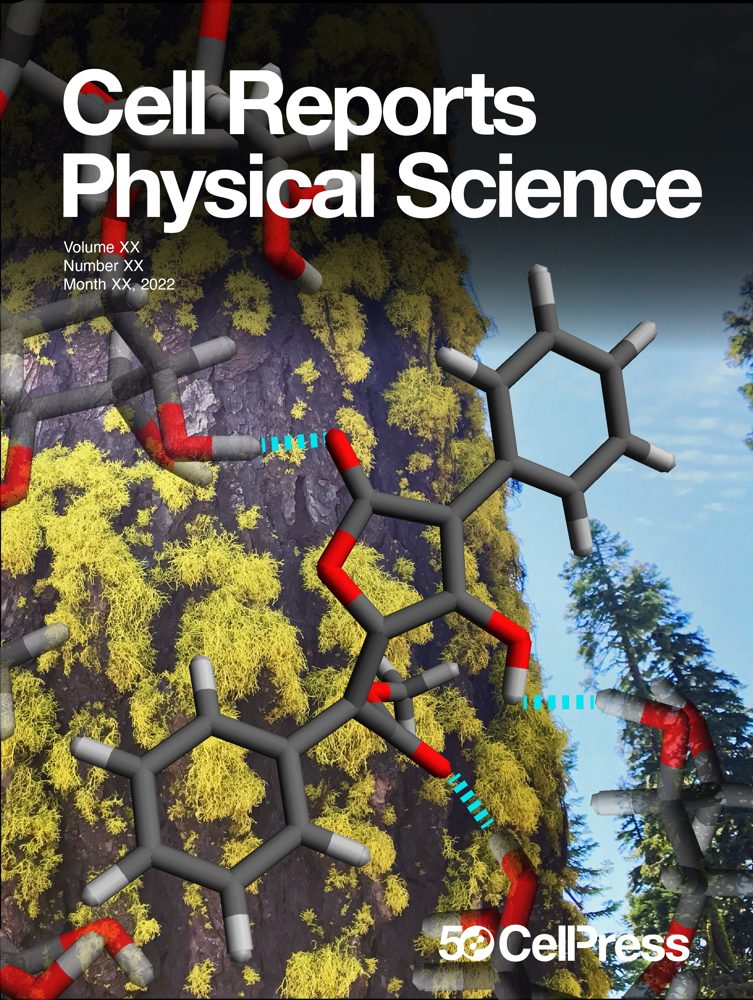
Cell Reports Physical Science cover featuring lichen and polysaccharide structures
Extreme photoprotection

Microbial sunscreens

Lichens and cyanobacteria survive intense UV with pigments such as scytonemin. With the Tucker, Varganov and Sun groups we study the structures and photophysics of these pigments, the role of cortical polysaccharides, and what they imply for life on early Earth, on UVC-intense exoplanets and for planetary protection on Mars.

Cell Rep. Phys. Sci. 2024 · Sci. Rep. 2025 · Astrobiology 2025

In the lab

From nature to molecule

Leaves, lichens, insects and microbes come back from the field to Reno. From there it is extraction, chromatography, NMR and mass spectrometry, and a lot of whiteboard time, until a structure emerges.

See all lab photos →

In the field

Where the questions start

Our chemistry begins in tropical and montane forests across Central and South America, where we collect plants, record the herbivores that feed on them and measure how chemistry changes from place to place.

See all field photos →